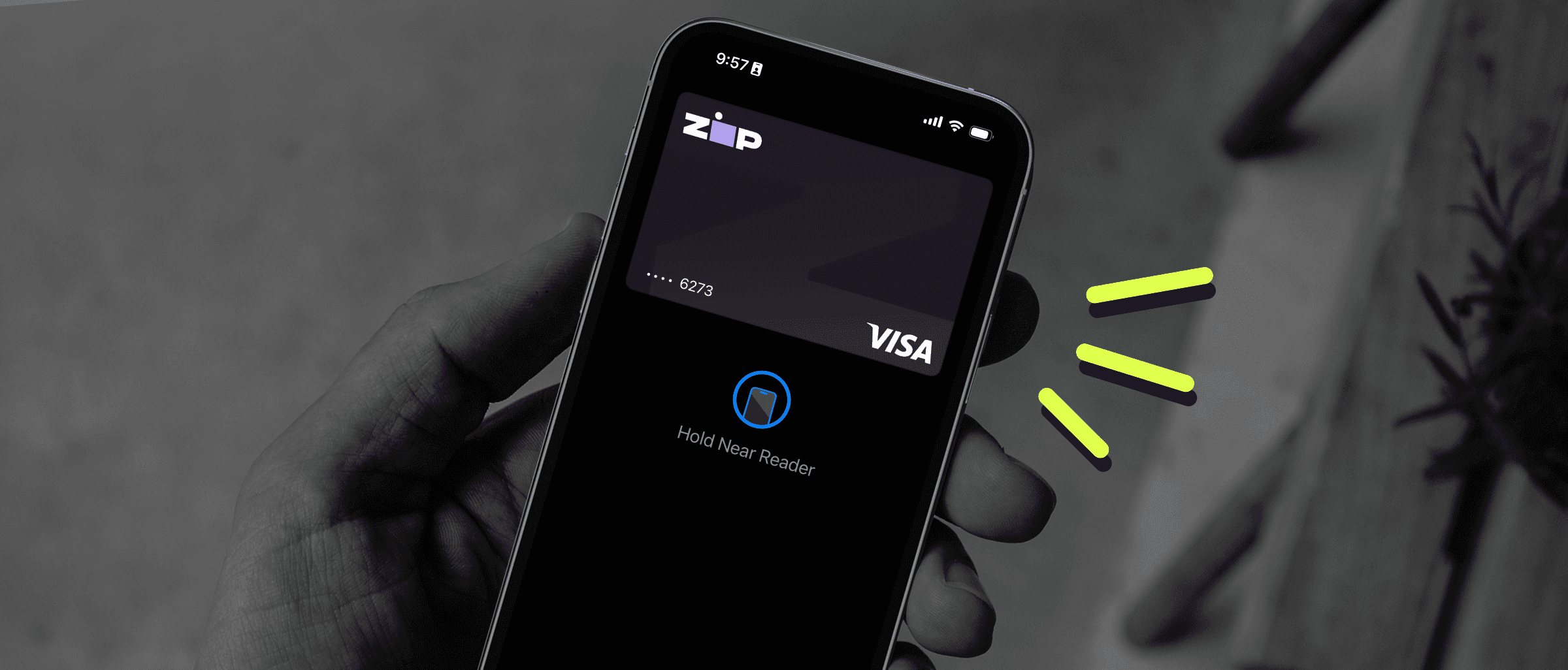
Unlocking adoption of Zip in-store by rethinking a core system interaction and reducing friction at physical checkouts within several risk, operational, and compliance constraints.
Paying in-store with Zip required several steps using the Zip app at point of purchase. The challenge was to improve this without compromising approval logic and fraud controls.
To pay in-store with Zip, customers create a Purchase Request (PR) in the Zip app before tapping their Zip in-store virtual card. Prior to this project, this process added several steps to the customer's journey at the worst possible moment: when standing at a physical checkout expecting a fast, familiar, low-stress payment experience.
These steps included:
Specifying the total order amount.
Reviewing and agreeing to a payment plan.
Confirming terms and conditions.
After performing these steps, customers were then able to tap their in-store virtual card to process payment.
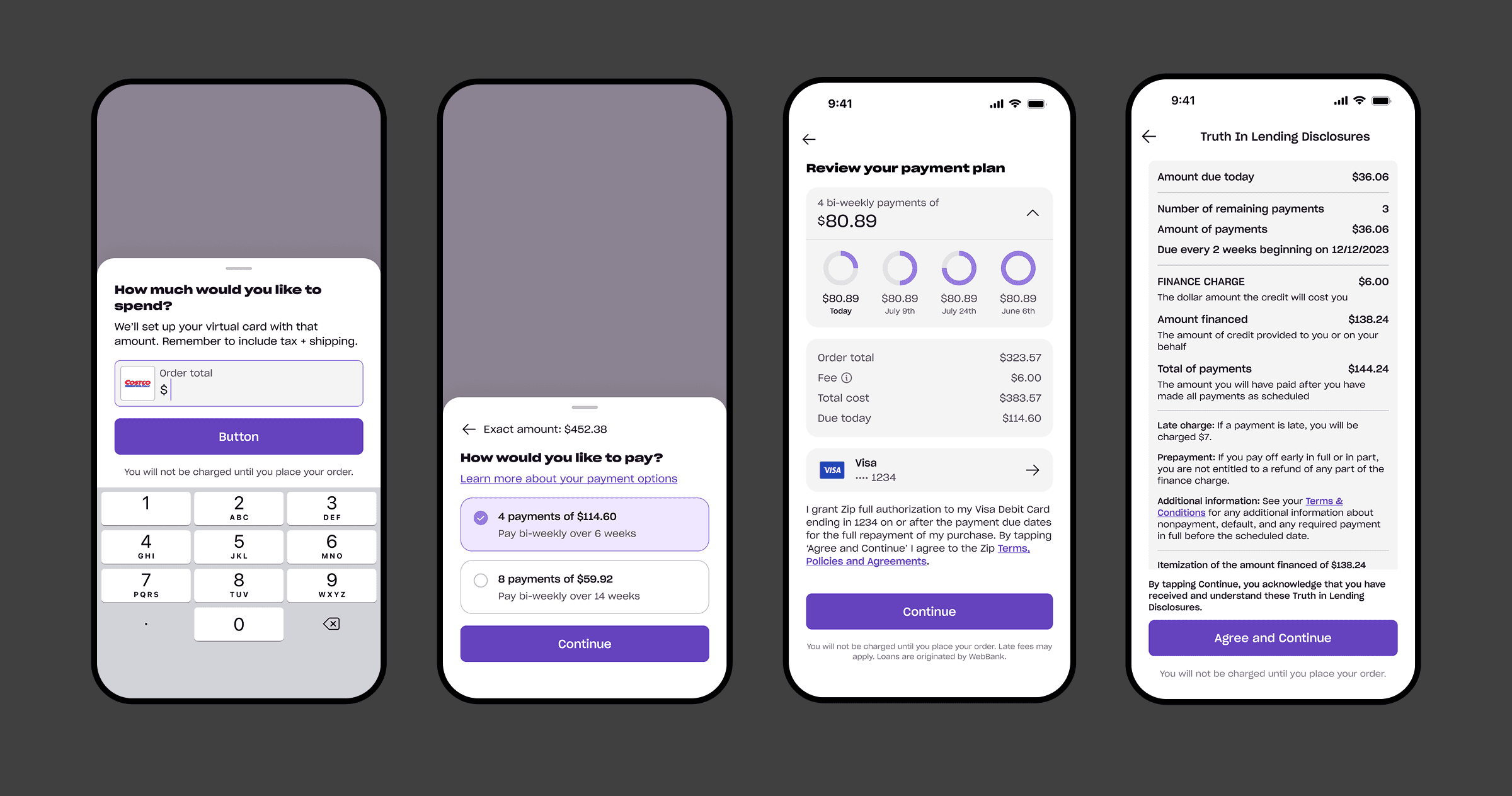
The Purchase Request (PR) flow
First-time in-store purchasers regularly took over ten seconds to complete a PR, causing hesitation, line pressure, and abandonment. Qualitative feedback consistently showed that the experience made users reluctant to try in-store BNPL again.
The core challenge was therefore to make Zip payments feel as fast and intuitive as standard tap-to-pay, while still preserving the business logic required to approve, price, and manage BNPL transactions.
In-store payments were being under-utilized by customers and had meaningful growth potential. All signs pointed to underperforming conversion and repeat usage due to checkout friction.
Around 20% of users dropped off during the in-store PR creation flow, rising to ~30% for new users. Only ~40% of first-time in-store users returned within 30 days - far below online benchmarks.
Removing this friction represented a direct commercial opportunity: improving step-level conversion from ~82% to 90–95% would unlock an estimated ~$1M in incremental annual revenue, while also validating a broader platform capability for dynamic settlement across channels.
This made in-store optimisation not just a UX improvement, but a revenue-critical and strategically enabling initiative.
The PR flow was a foundational system underpinning underwriting, approvals, and downstream risk controls, and was closely aligned with entrenched user expectations shaped by repeat behaviour. Any changes to PR creation needed to preserve these core functions and match or address existing mental models.
The experience was further constrained by compliance-mandated disclosures, which limited how much of the flow could be collapsed or deferred. In addition, the tap-to-pay lifecycle was tightly coupled to PR state, requiring careful coordination across authorization and capture events.
Finally, the work needed to be delivered incrementally, ensuring existing in-store traffic and revenue were not disrupted while changes were validated in production.
A high-pressure checkout environment exposed the order-amount entry as the step that broke payment flow and confidence.
In-store checkout is a uniquely high-pressure moment. Customers are standing in line, trying not to hold up the cashier, and often juggling multiple tasks at once. Being asked to complete a multi-step flow on their phone in that moment created stress and hesitation. Creating a PR felt less like paying and more like scrambling to make the transaction work.
Upon closer examination, one step was clearly the cause of most of the friction: entering the order amount. It required customers to know their total in advance, pause the checkout, and mentally reconcile fees and spending limits in real time. This single requirement was the main reason the PR flow broke down in-store.
The problem wasn’t creating a PR - it was asking users to manually enter an amount at the register.
We discovered this requirement was technically unnecessary. Because of how PR's were underwritten and settled, it was possible to pre-load a request with a customer’s full available spending power, allow them to tap to pay without knowing the final total, and reconcile the exact amount after authorization.
This reframed the challenge from 'how do we optimize this flow?' to 'how do we eliminate the one step that breaks it.'
With lean front-end structural changes, the in-store PR experience was redesigned into a 'single-step' checkout flow by removing manual order-amount entry at the register. Rather than introducing a new payment model, the solution preserved the existing Purchase Request (PR) system and shifted when information was required - allowing users to prepare their PR in advance before knowing how much they intended to pay.
This change prioritised speed and confidence at the register, where behavioural friction was highest. The work was released incrementally in two phases, initially to ~10% of users, to validate impact while minimising disruption to live in-store payments.
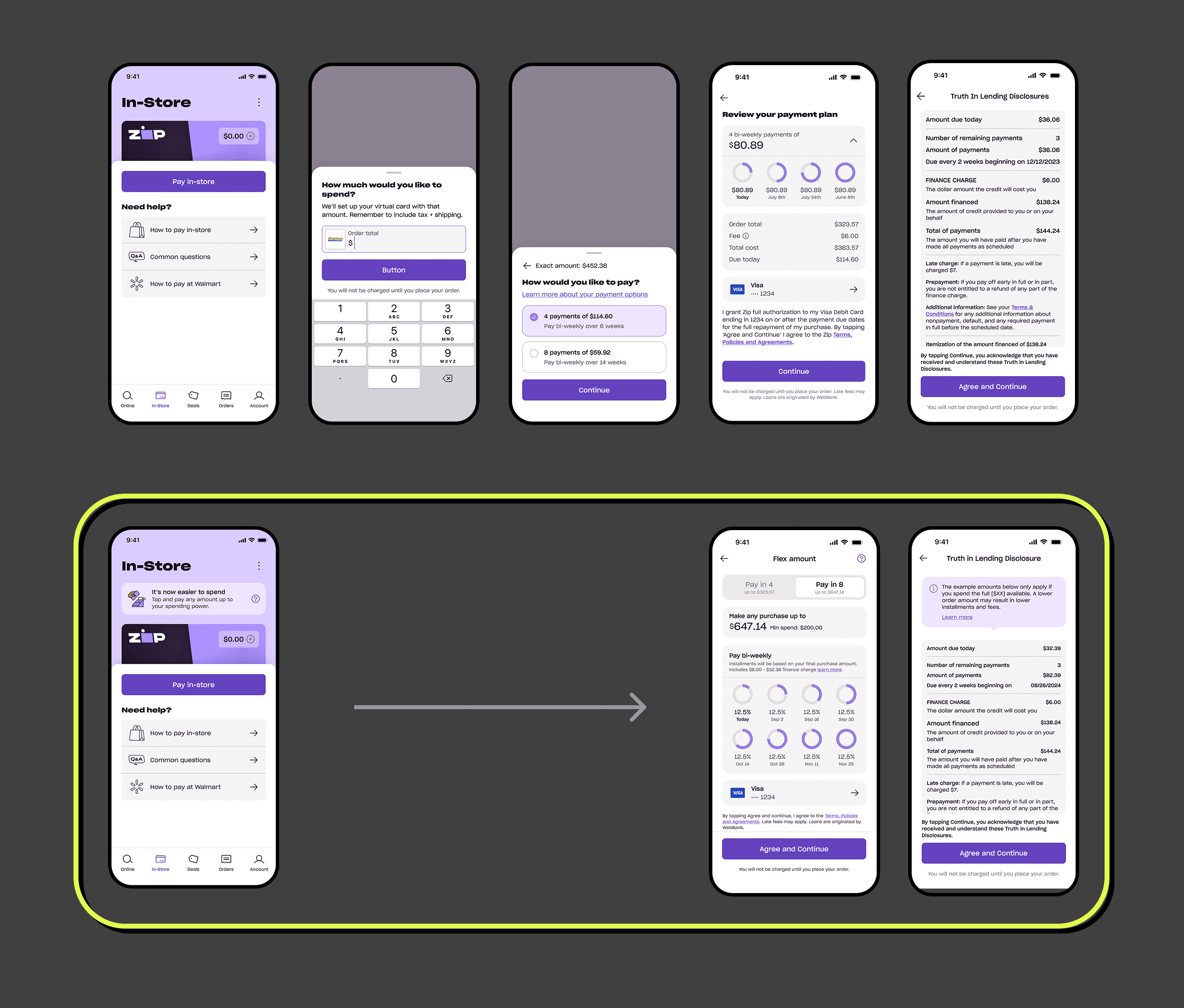
How it works
PRs were preloaded with spending power and reconciled post-authorization, aligning BNPL with card-based payment behaviour.
Instead of requiring users to know and enter their order total at checkout, PRs were pre-loaded with available spending power.
This removed the need to pause at the register to calculate totals, reconcile fees, or check limits - allowing users to tap-to-pay immediately in line with familiar credit-card mental models.
Once merchant authorization was received, the PR was adjusted automatically to reflect the final transaction amount, restoring remaining spending power and updating downstream details.
This also allowed PR's to be created well before a purchase was even being considered. Customers could now create PR's ready for a purchase of any amount before arriving at a mall or entering a store.
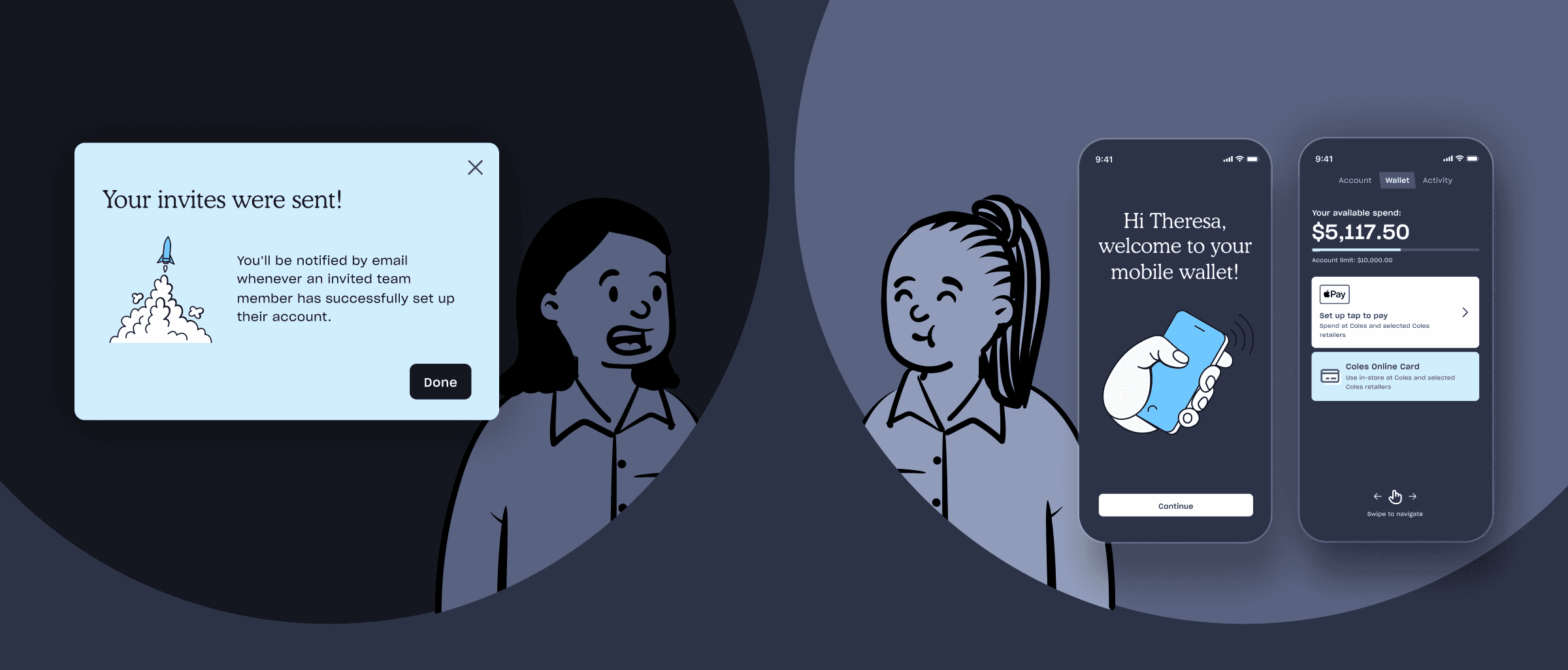
From the front-end experience, the change was minimally disruptive, with only a couple of screens introducing UI changes.
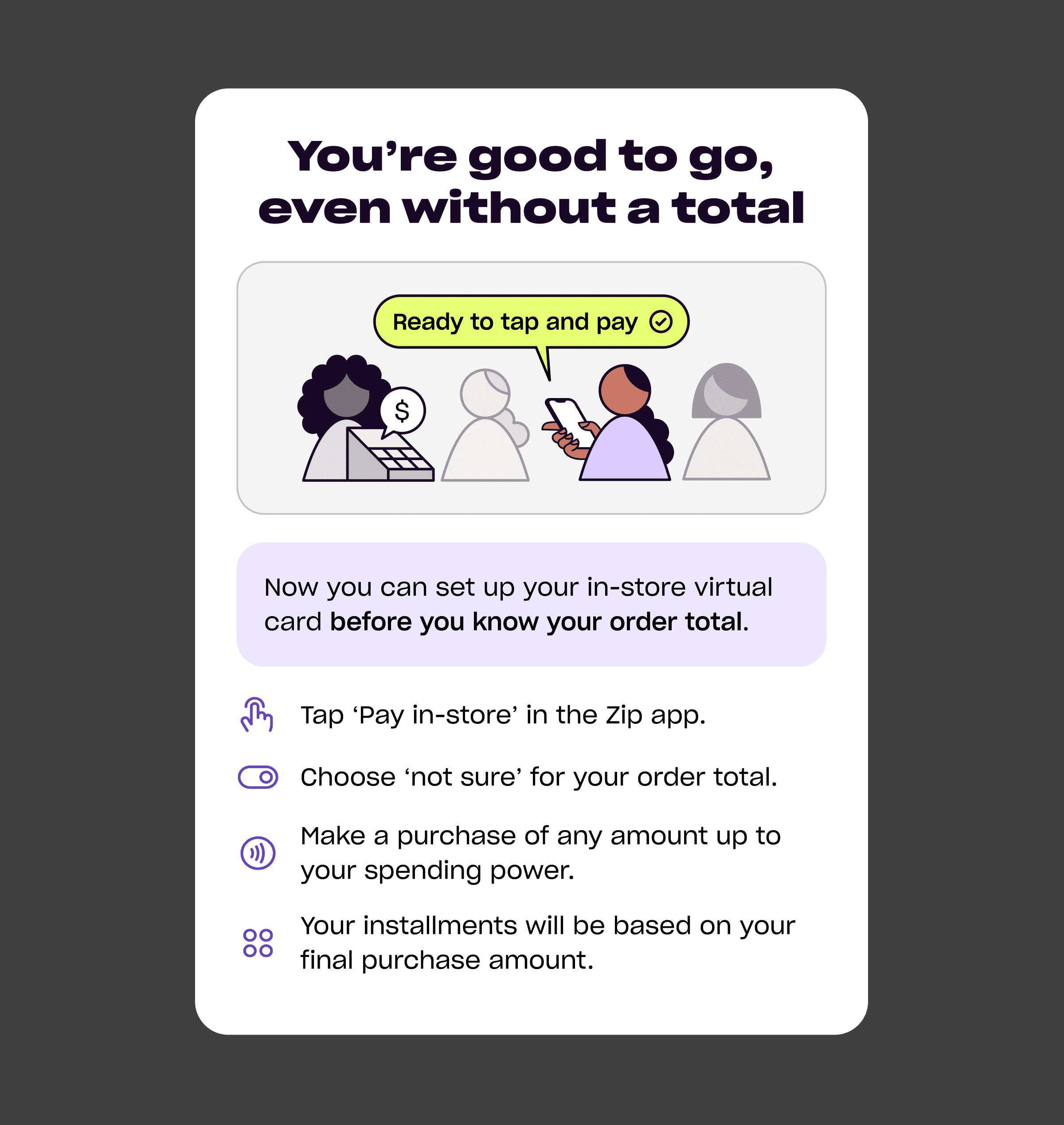
Educating existing customers involved updating existing mental models.
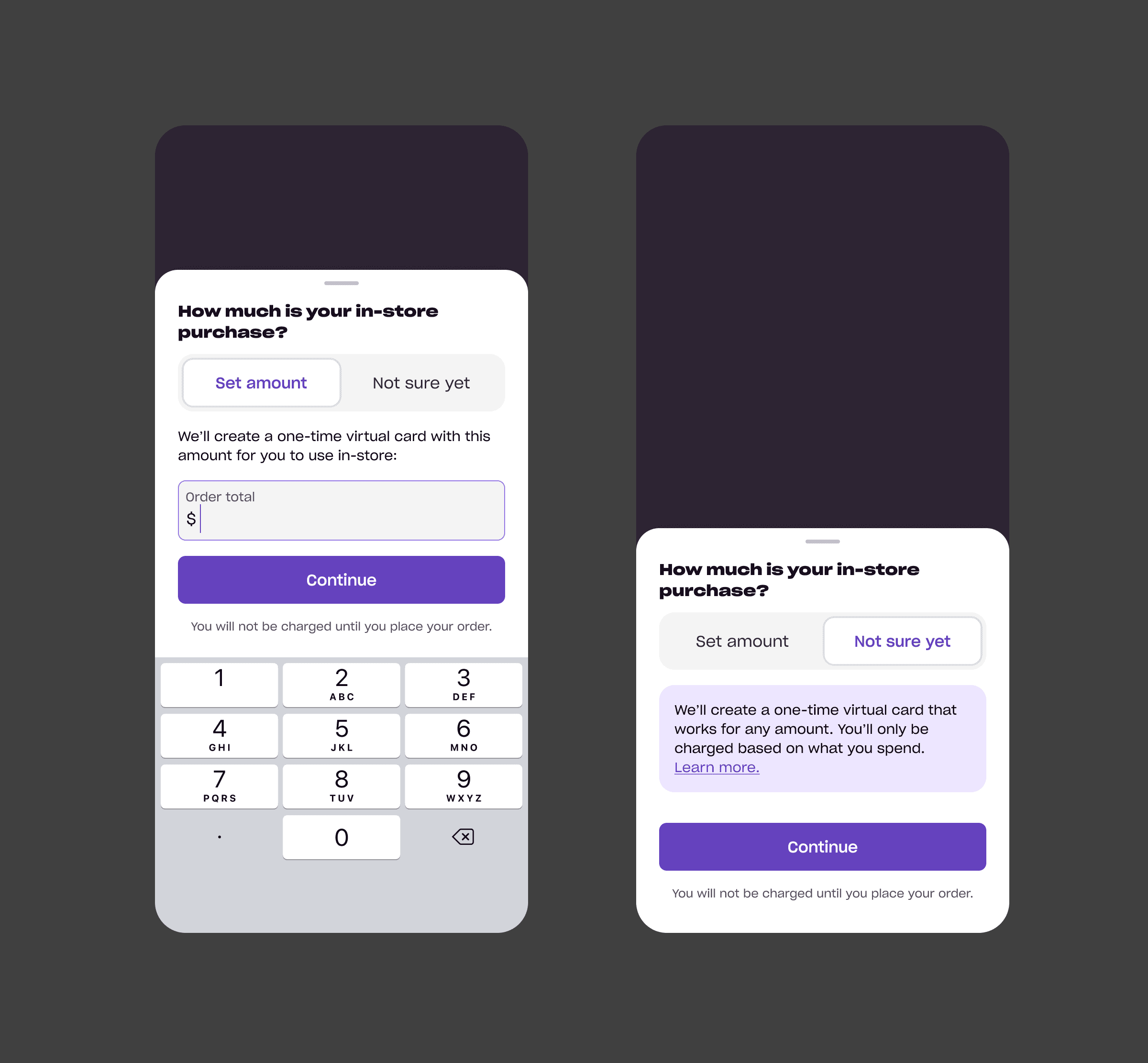
The Pre-Fill experience was designed to branch seamlessly from the existing flow to minimize noise and experience disruption.
Trade offs and safeguards
We prioritised checkout speed over upfront fee precision, offset by education, tooling, and incremental rollout.
Removing upfront amount entry meant an exact fee could no longer be shown at the moment of PR creation. However, research showed that the behavioural cost of checkout friction far outweighed the value of fee precision in that context.
Rather than forcing fee clarity into the high-pressure checkout moment, we shifted it earlier and later in the journey. Customers were supported with clearer education, a fee calculator to estimate costs in advance, and accurate fee information once the final amount was known — preserving transparency without reintroducing friction at the register.
This approach intentionally prioritised ease of purchase at checkout over upfront fee exactness. While some users valued precise fees, interviews and behavioural data showed that hesitation and abandonment were driven primarily by time pressure and social pressure at the register.
To balance this trade-off, safeguards were built into the system: fee education was surfaced earlier, estimation tools were provided, and final fees were confirmed post-transaction. All changes were rolled out incrementally, ensuring risk, compliance, and settlement flows remained intact as the model was validated in production.
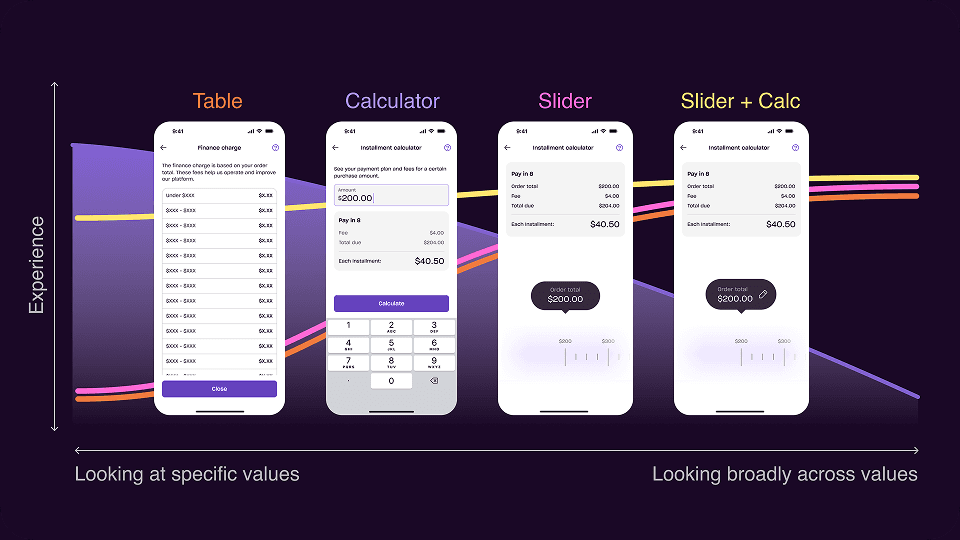
Trade-off analysis between different fee information formats
The initial test reduced checkout friction, materially increased in-store revenue and conversion, and shifted the organisation attention toward in-store experience improvements.
The first iteration of the 'Pre-Fill' project was rolled out to 10% of customers and monitored for 3 months resulting in positive signals and continuation of the project.
Behavioural
Reduced PR abandonment (conversion increased from 21% to 28%)
Faster time-to-pay.
Higher repeat in-store usage.
Organisational
Sparked renewed focus on an in-store experience that had lacked attention and priority.
Influenced formation of a dedicated in-store work-stream through a re-structure of the product org.
This project reinforced how small, well-placed changes can have outsized impact when they address real-world friction rather than on-screen complexity. Eliminating a single step proved more effective than refining the surrounding flow, especially when framed in time-pressured, physical environments.
It also highlighted the importance of pairing lean delivery with clear narrative alignment. While the solution was intentionally scoped, broader communication around the long-term vision could have increased earlier buy-in and reduced uncertainty across teams.
Early release surfaced a secondary learning: while the new flow reduced friction for existing users, it introduced uncertainty for first-time in-store customers unfamiliar with PRs. This underscored the need to differentiate onboarding from optimisation - bringing new users through a more guided experience while preserving speed for returning ones.